Ibiza town
Back to all places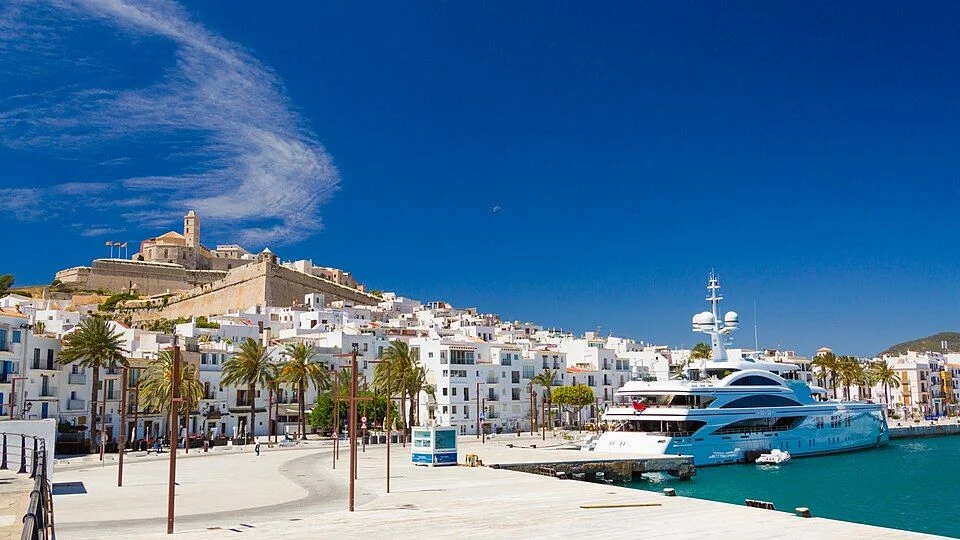
Located on the southeastern coast of the island of Ibiza in the Balearic archipelago, Ibiza Town—known locally as Eivissa—boasts a rich tapestry of history dating back over 2,500 years. Originally founded by the Phoenicians around 654 BCE as Ibosim, the settlement became a crucial trading post and maritime hub in the western Mediterranean. The town’s fortified upper quarter, Dalt Vila, is a UNESCO World Heritage Site noted for its remarkably preserved Renaissance walls constructed in the 16th century under orders of King Philip II of Spain as a defense against Ottoman incursions. Throughout its storied past, Ibiza Town was shaped by successive civilizations, including the Carthaginians, Romans, Vandals, and Byzantines, each leaving behind traces in the town’s architecture and cultural landscape. During the Moorish occupation from 902 to 1235, the town flourished as a center of commerce and culture until its conquest by the Catalan troops of King James I of Aragon. Ibiza Town’s Gothic cathedral, dedicated to Our Lady of the Snows, was built on the site of a former mosque and consecrated in the 13th century, standing as a testament to this turbulent period. The town’s ancient Necropolis of Puig des Molins, with tombs dating from the 7th century BCE to Roman times, is among the largest and most significant burial grounds of the ancient Mediterranean world. In the 20th century, Ibiza Town became a magnet for artists, intellectuals, and later, the international jet set, spurring a cultural renaissance. Today, amidst its labyrinthine streets and historic ramparts, visitors can explore museums, vibrant markets, and lively squares, all while discovering the enduring legacy of one of the western Mediterranean’s oldest cities.
38.90822, 1.43410