Cala d’Albarca
Back to all places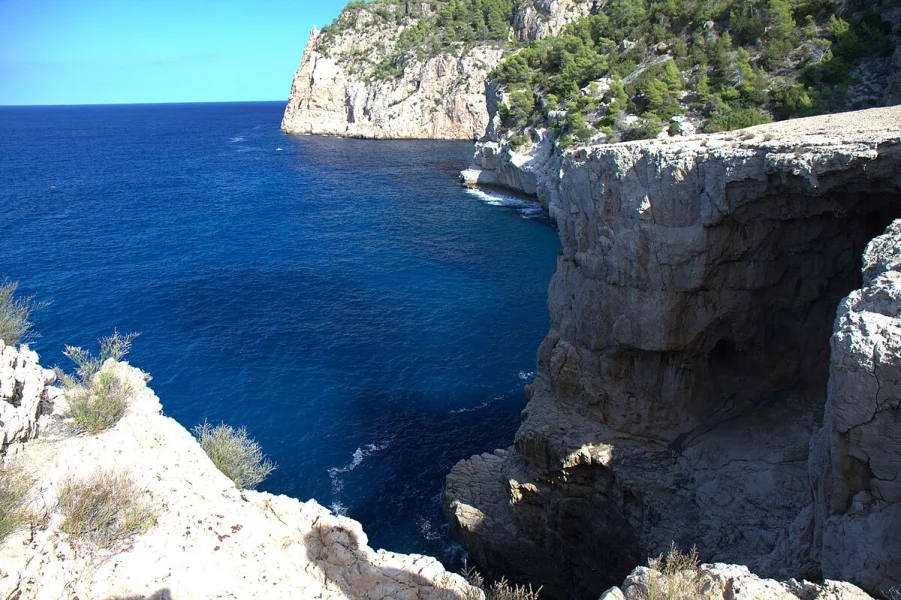
Nestled along the rugged northern coastline of Ibiza, Cala d’Albarca reveals itself as a secluded and dramatic bay renowned for its unspoiled natural beauty and geological wonders. Enclosed by towering limestone cliffs and adorned with enormous boulders, the cove forms a hidden sanctuary that has remained largely unchanged throughout history. Archaeological evidence suggests that the area and its surrounding cliffs—formed during the Miocene epoch millions of years ago—may have served as vantage points or temporary refuges for early Phoenician and later Carthaginian settlers, who established trading settlements around Ibiza from the 7th century BC. Local legend persists that pirate ships would sometimes shelter in the cove’s clear turquoise waters during the 16th and 17th centuries, as they evaded corsairs and royal patrols in the Mediterranean Sea. Throughout the Middle Ages, Cala d’Albarca was part of the rural holdings of Santa Agnès, itself referenced in medieval land grants during the Christian reconquest of Ibiza in 1235, when the island fell to the forces of King James I of Aragon. The rugged terrain surrounding the cove later contributed to its enduring isolation, sparing it from the intense tourism-driven development that transformed much of Ibiza in the 20th century. Today, explorers who traverse the pine forests and descending paths are rewarded not only with breathtaking vistas, including the striking natural stone arch known as “Puente de Piedra,” but also a rare glimpse of an Ibiza coastline much as it might have appeared centuries ago—wild, mysterious, and rich with echoes of the past.
39.06567, 1.37203